Flex Duct, Sheet Metal or Duct Board: Why Type Matters
Your duct material affects how ducts are cleaned and what can't be cleaned at all. A plain guide to flex duct, sheet metal and fiberglass duct board.
When people picture air ducts, they usually think of shiny metal boxes like the ones in movies. Many homes around Humble, Atascocita and Kingwood have some of that, but they often have other materials too: round, flexible ducts in the attic, or fiberglass board formed into rectangular trunks. Each material behaves differently, and that affects how a duct cleaning is done and what a cleaning can't fix.
Here's a plain guide to the three main types.
The three common duct types
The EPA's guide to duct cleaning describes the main materials found in homes:
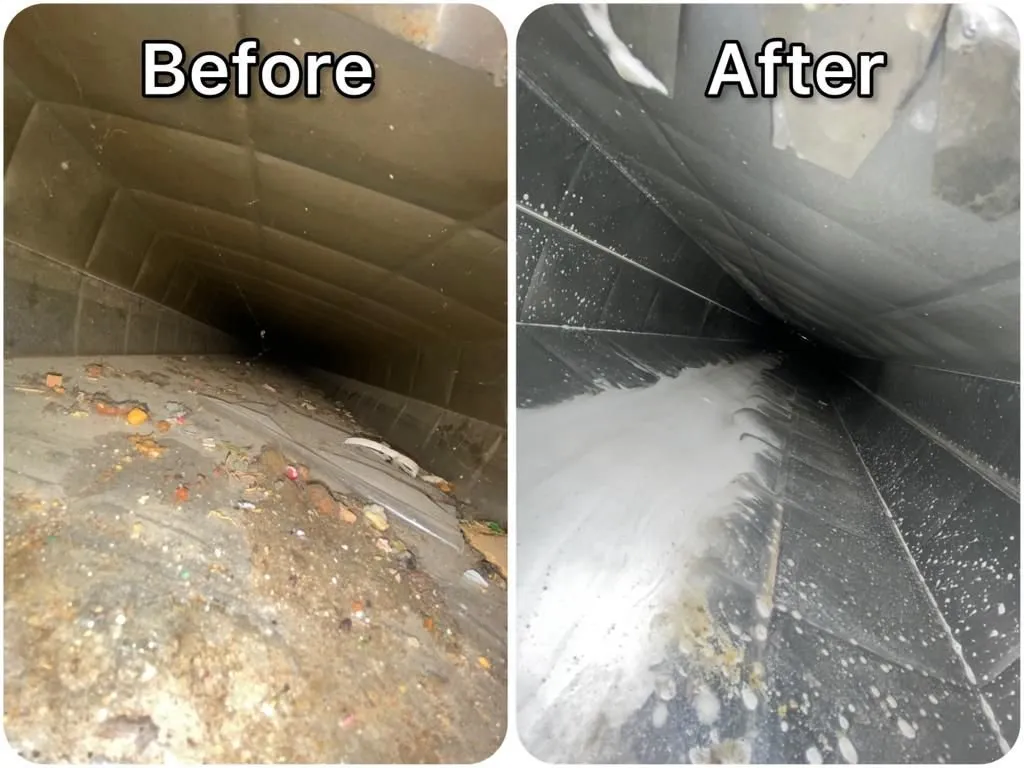
- Bare sheet metal. Rigid metal ducts, round or rectangular, with a smooth interior.
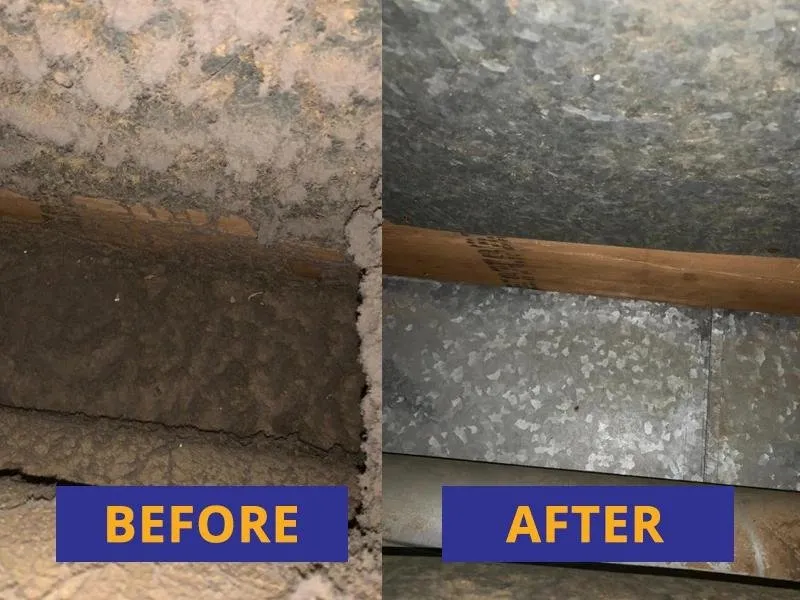
- Lined sheet metal and fiberglass duct board. Sheet metal lined on the inside with fiberglass, or rigid boards made of fiberglass formed into ducts.
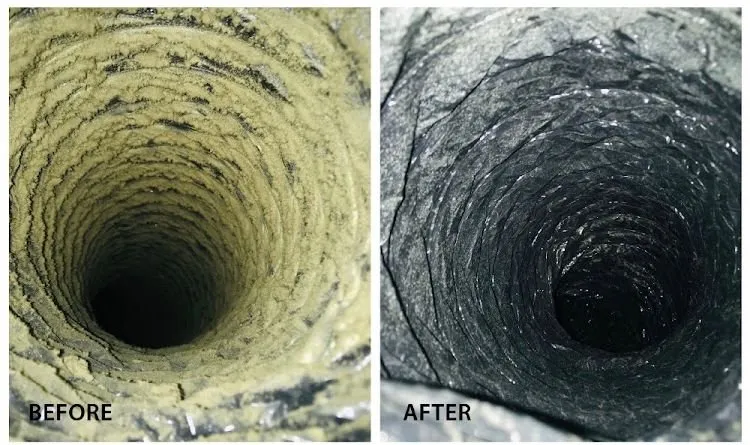
- Flexible duct. Round, flexible tubes, usually with a plastic inner liner, a layer of insulation and an outer jacket. The EPA notes that use of flexible duct has increased significantly since the early 1970s.
Many homes have a mix. A common setup is a sheet metal or duct board trunk near the air handler with flex duct running out to each ceiling register.
How to tell what you have
You can often tell from a register or from the attic:
- Look inside a register. Remove the cover and use a flashlight. Shiny metal walls mean sheet metal. A dark, slightly fuzzy or matte surface often means a fiberglass liner or duct board. A ribbed, accordion-like tube usually means flex duct.
- Look in the attic if you can do so safely. Flex duct looks like large, round, often silver or gray tubes. Duct board looks like rectangular boxes with a foil facing. Sheet metal is rigid metal, often wrapped in insulation in an attic.
If you're not sure, a photo of the inside of a register helps us plan the cleaning.
How each type is cleaned
Sheet metal is the most forgiving. Its smooth, rigid surface holds up well to brushing and vacuuming.
Fiberglass-lined ducts and duct board need a gentler approach so the surface isn't damaged. The EPA's consumer checklist calls for soft-bristled brushes on fiberglass duct board and fiberglass-lined sheet metal.
Flex duct is the most delicate of the three. The inner liner can tear if it's treated roughly, and long, sagging runs are harder to work through. The EPA notes that flex duct can be cleaned with soft-bristled brushes, but that it can be more economical to simply replace accessible flex duct, especially runs that are already in poor shape.
One rule applies to every type: the EPA says steam cleaning and other methods involving moisture should not be used on any kind of ductwork.
Our air duct cleaning covers the supply and return ducts and the registers, using rotating brushes to loosen debris and a HEPA-filtered vacuum to remove it. It's $199 for up to 10 vents, plus $29 for each additional vent. For a few problem runs, deep duct cleaning is $59.99 per vent. If you're curious about the equipment, our roto-brush HEPA cleaning page explains it.
When duct type limits what cleaning can do
This is the most important part. Duct material matters most when something has gone wrong:
- Wet or moldy insulated ducts. The EPA, along with industry groups, says that if fiberglass duct liner, duct board or flex duct insulation gets wet or moldy, it can't be effectively cleaned and should be removed and replaced. If you suspect mold, have a qualified professional assess it.
- Torn or collapsed flex duct. Cleaning won't repair a torn liner or a crushed run. An HVAC contractor should replace it.
- Deteriorating duct board. If the surface is crumbling or the foil facing has come loose, that's a repair question, not a cleaning one.
When we see one of these during a cleaning, we'll stop and tell you so you can decide on next steps with an HVAC contractor.
Keeping any duct type in good shape
A few habits help no matter what your ducts are made of:
- Change filters regularly. The EPA recommends the highest-efficiency filter your system's manufacturer allows.
- Control moisture. In a humid climate, moisture is the biggest enemy of insulated ducts. Have an HVAC contractor check for condensation problems, and make sure ducts in the attic are sealed and insulated.
- Fix leaks and sagging runs before they get worse.
- Keep registers clear so air moves freely.
If you'd like to know what your ducts are made of and whether they're good candidates for cleaning, request a free estimate from American Air Duct Cleaning Humble.
Sources
- Should You Have the Air Ducts in Your Home Cleaned?, U.S. EPA, last updated February 19, 2026