Dryer Vent Safety in Two-Story Homes With Long Vent Runs
Upstairs laundry rooms often mean long dryer vent runs through the attic or roof. How to spot a clog, what the USFA advises and what cleaning costs.
A second-floor laundry room is one of the most requested features in newer two-story homes. Nobody misses carrying baskets up and down the stairs. The trade-off is hidden in the walls and attic: the dryer vent often has to travel a long way, with several turns, before it reaches the outdoors. Long runs work, but they need more attention than a short vent through a first-floor wall.
Why long runs collect more lint
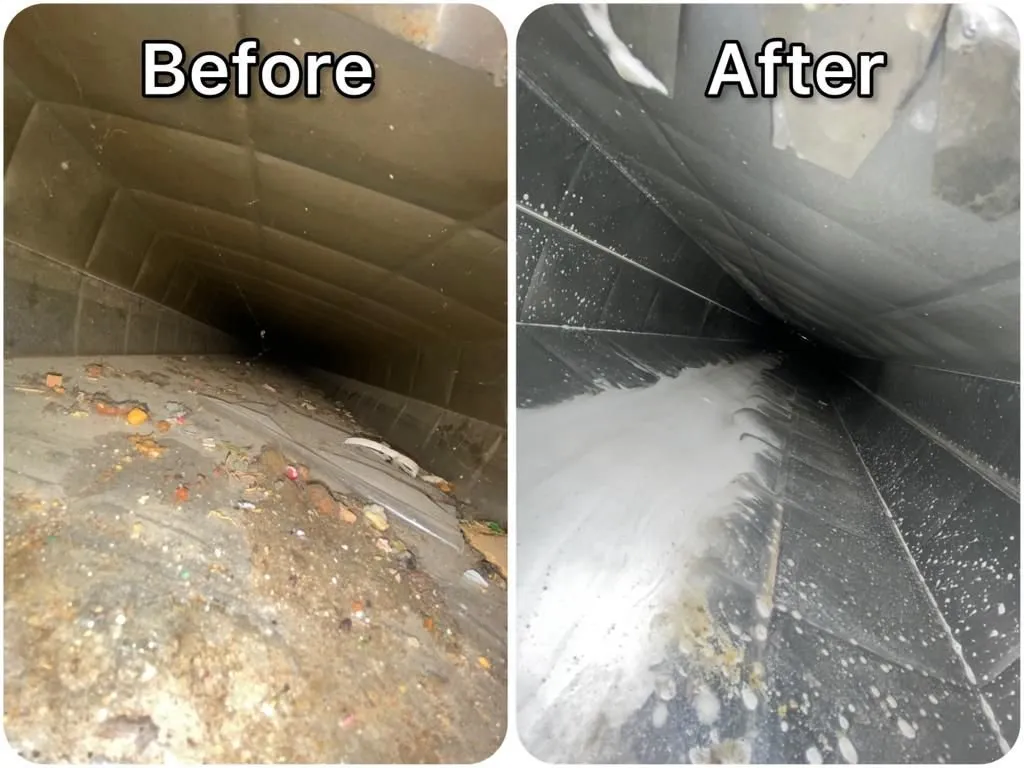
A dryer pushes warm, damp, lint-filled air through the vent. The lint filter catches most of it, but not all. What gets past tends to settle wherever the airflow slows down:
- At elbows and turns. Every bend creates turbulence and a spot for lint to collect.
- On vertical rises. When a vent goes up through the attic to the roof, the dryer has to push air upward, and lint can fall back and pile up at the bottom of the rise.
- At the exit. Roof caps and wall hoods have dampers or flaps that can stick, and some have screens that trap lint. A screen over the exit can catch lint and block it. The U.S. Fire Administration advises making sure the outdoor flap opens when the dryer runs.
- In crushed or sagging sections. In attics, flexible transition duct can get stepped on or sag between supports.
Humidity adds to the problem. In a climate like ours around Humble, TX, damp lint sticks to duct walls more readily than dry lint.
What the dryer manufacturer says matters
Every dryer comes with installation instructions that list the maximum vent length allowed, and that maximum shrinks for every elbow added. If your vent is longer than your dryer is rated for, the machine may struggle no matter how clean the vent is. Some homes use a booster fan to help with long runs; those should be installed and maintained according to their own instructions.
If you aren't sure how long your run is or what your dryer allows, look up the installation guide for your model. It's usually on the manufacturer's website.
Warning signs of a clogged vent
You may not be able to see the vent, but you can watch for symptoms:
- Clothes take longer to dry, or need a second cycle.
- The dryer feels very hot on the outside, or clothes come out unusually hot.
- The laundry room gets warm and humid when the dryer runs.
- A burning smell while drying. Stop the dryer and have it checked.
- Little or no airflow at the exit. Go outside, or look up at the roof cap, while the dryer is on. You should feel or see air moving and the flap opening.
- Lint around the outside exit, or around the dryer itself.
The U.S. Fire Administration lists failure to clean as a leading cause of home dryer fires. It's worth taking any of these signs seriously.
What you can do yourself
Some maintenance is easy and makes a real difference:
- Clean the lint filter before or after every load, as the USFA recommends, and never run the dryer without it.
- Wash the lint screen occasionally with warm, soapy water if you use dryer sheets, which can leave a film.
- Check the transition duct behind the dryer. The USFA recommends rigid or flexible metal venting, not plastic or foil.
- Don't overload the dryer.
- Turn the dryer off when you leave home or go to bed.
What's hard to do yourself is clean a long run that goes through the attic to the roof. Brush kits from a hardware store may not reach the whole length or get past several turns, and working on a two-story roof isn't safe for most homeowners.
How often to have it cleaned
The USFA recommends cleaning the vent at least once a year, or sooner if drying times increase. Homes with long runs, large families or pets that shed may need it more often.
What a professional cleaning costs
At American Air Duct Cleaning Humble, dryer vent cleaning is $99 for up to 10 feet, plus $15 for each additional foot. Long runs cost more because there's more to clean. Here's how the math works on a few examples:
| Vent length | Price |
|---|---|
| 10 feet | $99 |
| 18 feet | $99 + 8 × $15 = $219 |
| 25 feet | $99 + 15 × $15 = $324 |
Ask for the measured length before work begins so the price is clear up front. If you're also having the ducts cleaned, see our air duct cleaning page or the full pricing page.
A clean vent helps your dryer work the way it was designed to, and it removes lint that shouldn't be sitting in your walls and attic.